Sugar Pine Point is a forested promontory on the western side of
Lake Tahoe. The park includes a mile and three quarters of lake frontage with a number of
sandy beaches and a unique natural area where the untouched, primeval forest of the Tahoe
Basin marches right down to the water's edge. The developed area south of General Creek
features a number of historic buildings including a hand-hewn, 19th century log cabin and
an elegant turn-of-the-century summer home known as the Ehrman Mansion.
The park extends some three-and-one-half miles west into
the General Creek watershed, a natural entryway into the 62,469-acre Desolation Wilderness
Area. Clearly marked trails (suitable for summer use) wind up the gentle, forest-filled
valley formed by General Creek and provide easy access to the wilderness beyond.
The floor of the canyon is made up of glacial debris (mostly decomposed granite) that
was deposited approximately 10,000 years ago as the glacier melted.
The forest at sugar Pine Point includes sugar and Jeffrey pines, white and red firs,
and incense cedars. Lodgepole pine, quaking aspen, black cottonwood and mountain alder are
found in the stream zone along General Creek. Shrubs include green-leaf manzanita, pinemat
manzanita, squaw carpet, mountain whitehorn, some chinquapin and huckleberry oak. Spring
and summer wildflower displays include Indian paintbrush, lupine, columbine, penstemon,
and several types of buckwheat. The showy, red, saprophylic snowplant can be seen during
the spring.
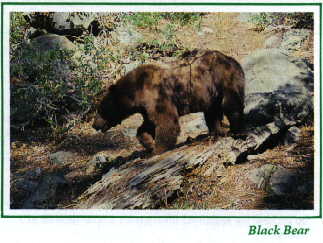
Wildlife is most plentiful in the more remote parts of
the park, but chickadees, chipmunks, and both Beechey and golden-mantled ground squirrels
are often seen even in the developed areas. Other less often seen animals include black
bear, coyote, raccoon, porcupine, pine marten, beaver, bobcat and deer. Steller's jays,
juncos, mountain chickadees, flycatchers, woodpeckers, and the brilliantly-colored western
tanager are among the many kinds of birds that live in this forest. Merganzers, Canada
geese, mallard ducks, and kingfishers can often be seen on or near lakes and streams.
Although many of these animals and birds winter elsewhere, some of them are year-round
residents. Their lively presence adds a fascinating dimension to the otherwise profoundly
quiet, snow covered world of this park in mid-winter. Bald eagles, for example, can
sometimes be seen perched in trees overlooking the lake.
As wild animals are inclined to steal food (and we ask you not to feed them) please
secure food in your vehicle at night or when you are not present.
Exhibits and publications about the natural history of the Tahoe Basin are available in
the nature Center situated in the Ehrman Mansion's old power-generating plant.
During your visit, you may see evidence of various ongoing natural resource management
programs. Erosion control, thinning of overcrowded forests, removal of dead trees in
high-use areas, prescribed burning and habitat improvement are a few of the many projects
that are being undertaken in order to maintain or restore natural conditions within the
park.
Interpretive programs offered during the summer include nature walks, campfire
programs, and junior ranger programs for children ages 7 through 12. Check the posted
schedule for details.
Cover Photo (Ehrman Mansion) by David Weintraub, All Others by Ken McKowen
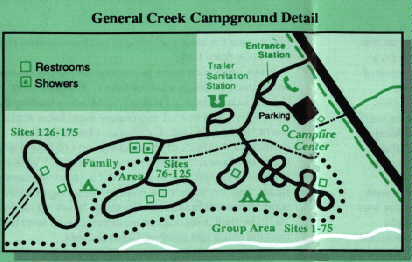
There are 175 campsites in the campground. Each site has a table and stove. Restrooms
with sinks and flush toilets are located nearby. Shower facilities and a sanitary dump
station are also available during the summer. family campsites can accommodate a maximum
of eight people and three vehicles. Ten group campsites can each accommodate up to 40
people and 10 vehicles. The campsites are suitable for tents, trailers up to 40 feet, and
motorhomes up to 30 feet. Reservations for family campsites can made up to eight weeks in
advance by calling MISTIX at 1-800/444-7275. Group campsite reservations can be made up to
12 weeks in advance. Reservations are strongly advised during the summer (mid June through
labor Day).
The park remains open throughout the winter months. One restroom is heated, and the
road and parking spaces are kept clear of snow, though considerable forethought and good
camping equipment are important. Winter conditions at this elevation (6,200) include
frequent snow storms and deep snow packs. Temperatures go down to near zero.
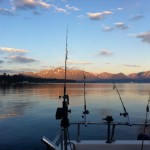
Deep-line fishermen can try their luck along Lake Tahoe's 300-foot-deep underwater
ledges by trolling for lake trout (Mackinaw) and Kokanee Salmon. Top-lining (trolling near
the surface) for rainbows is also popular. Shore fishing does not tend to be productive,
though the lake's tributaries can be. Be aware that these streams have a very short open
season, usually from July 1 through September 30.
Hiking, Biking, and Cross Country Skiing
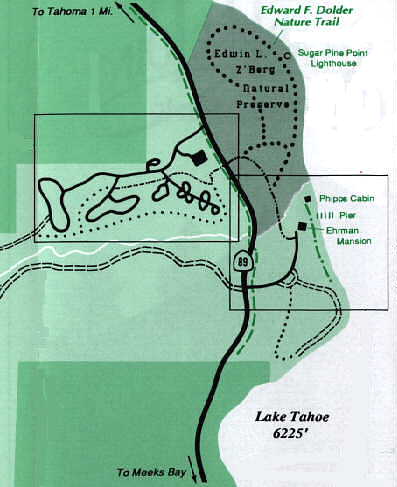
Trails serve almost every part of the park. A short loop trail through the Z'Berg
Natural Preserve, the Dolder Trail follows the lakeshore and passes the world's highest
working lighthouse. For those with more time, the General Creek Trail is a 6 ½ mile loop,
offering an optional side trip to Lily Pond. Lost Lake, a beautiful alpine lake, is a full
15 mile round trip, and should only be tackled by seasoned hikers with ample time (6 to 7
hours).
Mountain bike use has increased significantly over the last few years. Mountain bikers
are asked to be responsible riders, treading lightly, staying on designated riding trails
only and announcing their presence when coming up on hikers. Trails not shown as hike/bike
trails are off limits to bikes. Please help us protect the park by not creating new
trails. The paved West Shore Bike Trail parallels the highway through the park as far as
the south boundary where it officially ends.
Dogs must be kept on leash (six-foot maximum length) and are allowed only in the
developed areas of the park. Dogs are not permitted on park trails.
Those wishing to enter Desolation Wilderness through the park will need to obtain a
wilderness permit from the U.S. Forest Service for both day-use and overnight trips.
Permits are available at the South Lake Tahoe Forest Service Headquarters, the Taylor
Creek Visitor Center, or (when staffed) William Kent Campground. Day-use permits are
available at most Forest Service trailheads.
During the winter, rangers groom two of the four cross-country ski trails and offer ski
lessons or tours practically each weekend during January, February and March. You can Obtain
the Sierra District's Fall and Winter Hike Schedule by sending a stamped, self-addressed
envelope to: Sierra District State Parks, P.O. Drawer D., Tahoma, CA 96142.
The Park's beach and central pier are popular places for swimming, sunbathing,
picnicking, and fishing. Please swim with appropriate caution; Tahoe's waters are quite
cold. Nearby marinas provide boat launching, mooring, and rentals for fishing, water
skiing or just exploring. Due to space limitations, boats may not be beached or moored
overnight at Sugar Pine Point. There is a special boat camp at Emerald Bay State Park.
To view local maps, click on...
Human beings have lived in this scenic region for thousands of years. The Washoe
Indians, who lived in the Carson Valley east of lake Tahoe, spent their summers hunting
and fishing here. It was a time of feasting, preparing food for the coming winter, and
socializing with friends and relatives they hadn't seen since the previous year. Bedrock
mortars and other evidence of long-term seasonal residence can be seen in various places
near the lake, including several sites within Sugar Pine Point State Park.
Lake Tahoe first came to the attention of the western world through the journals of
John C. Fremont, who sighted Lake Tahoe in February 1844 while leading the U.S. Army's
first official exploratory expedition across the Sierra Nevada and into California. One of
the first permanent residents of this area was an old-time frontiers-man from Kentucky by
the name of "General" William Phipps (1813-1891). He staked out a 160 acre
homestead claim on Sugar Pine Point in the spring of 1860, and soon afterwards built
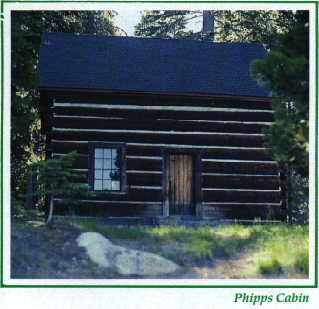
himself a rough-hewn log cabin. In1872, he built a second cabin, which can be seen today
near the shore just south of General Creek.
The discovery of silver at Virginia City, and the resulting rush of people to the
Comstock Lode during the 1860's and 1870's, brought development to the south shore of the
lake. At the same time, in order to supply lumber and firewood for the mines and rapidly
growing towns, logging activity increased throughout the lake basin. A sawmill was built
at Glenbrook in 1873 and saw logs were brought there by railroad and by steamers that
towed great log booms from various points around the lake. The lake basin's most easily
reached sugar and Jeffery pines were cut and hauled out of the forest and down to the lake
by teams of oxen and steam donkeys. There was even a logging camp at Sugar Pine Point for
a while, which explains why there aren't more sugar pines in the vicinity of General
Creek. We can thank General Phipps for protecting his 160 acres from the saw.
Many people discovered Tahoe's beauty during the Comstock mining boom and soon a number
of large, elegant hotels were under construction to serve well to do travelers from Nevada
and California. Tahoe Tavern at Tahoe City and the opulent Tallac House near the present
Forest Service Visitor Center were two of the most famous.
In 1888, Phipps sold his property to W. W. "Billy" Lapham, who proceed to
establish a Summer resort, the Bellevue. Taken over by the bank in 1889, and new owners
and managers in 1890. Bellevue was rapidly coming to be known as an elegant family resort
when fire destroyed the main hotel building and nearby cabins in 1893.
One of the first to begin buying property for their own private use was Isaias W.
Hellman, an internationally know pioneer west-coast banker. He bought up about 1,000 acres
in the Sugar Pine Point area in 1897-1898, and in 1901-1903 built a sumptuous new Summer
home--"The finest High Sierra Summer home in California,"--using locally
quarried granite and other native materials. Designed by Walter Danforth Bliss, a well
know architect of the time, the rustic but grand, wood-paneled, three storied house was
equipped with the very best utility systems (including electric lights), and was
surrounded by carefully planted and tended trees, lawns and flowerbeds.
Successive generations of the same family continued to use the house, which came to be
widely known as the Ehrman Mansion, though the family's name for it was Pine Lodge. In
1965, the house and nearly 2,000 acres of land in General Creek Watershed were acquired by
the people of California for park purposes. Today, the house, a fascinating example of the
"opulent" tradition in Tahoe Summer homes, serves as a house museum, complete
with furnishings. Guided tours are scheduled from July 1 through Labor Day.
In 1897, San Francisco businessman I.W. Hellman began buying property at Sugar Pine Point
and by 1913 had acquired nearly 2000 acres. His grand but informal summer home, called
Pine Lodge, was completed in 1903 and was considered to be one of the finest in the high
Sierra. His daughter, Florence Hellman Ehrman inherited the estate and she and her husband
Sydney spent many summers here entertaining family and friends.
The building site was originally a sand hill. Tons of topsoil were brought from the
back country to provide the base for lawns and gardens. Most of the building materials for
the house were obtained locally; the granite from Meeks Bay and the lumber from Hobart
Mills, north of Truckee. The house, designed by Walter Danforth Bliss, was equipped with
the best and most modern utility systems including electric lights and complete indoor
plumbing. Steam generators produced electricity until commercial power was available in
1927. Water was obtained from General Creek and later pumped directly from the Lake.
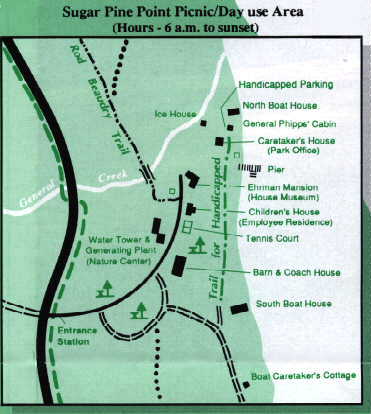
Outlying buildings include a caretaker's cottage by the lake, the children's house by
the tennis court, maids' quarters, butlers' house, ice house, coach house, tank house and
two boat houses. The Ehrman's owned two boats, the Comet" and the Cherokee."
Comfortable wicker lounge furniture and a billiard table were to be found on the porch.
The north stone room was used for luncheons and furnished with an oak dining set. The
south stone room was a game room and displayed the family's collection of Indian baskets
and Navajo rugs.
The fireplaces in the living room and the dining room were the primary source of heat
for the house. The living room was furnished in dark, overstuffed furniture with matching
floral drapes. The dining room paneling is hand-woven strips of redwood >and the upper
paneling is of hand-woven grass. The elevator was installed in 1958 to ease access to the
second floor.
The wing to the northwest contains the kitchen, pantry and staff dining room. Two full
time cooks and several helpers were employed to prepare meals for the family, their
numerous guests and a live-in staff of twenty-seven. Wood stoves and an ice box were used
in the kitchen until 1945 when a large commercial gas range and refrigerator were
installed.
The spiral staircase rises to the second floor where a hall runs north and south
joining the eight bedrooms and eight bathrooms. The family and quests would stay here in
rooms furnished simply with brass beds and Navajo rugs. The wing over the kitchen
contained a sewing room, linen closet and storage rooms. A back staircase leads to the 3rd
floor staff quarters consisting of four bedrooms, one bath and many storage closets.
Guests of the Ehrman's participated in various activities on a regular basis. Mrs. Ehrman
usually scheduled hikes, swimming, riding, fishing, boating, tennis, picnics, croquet and
other games.
In 1965 the house and 1,975 acres of the estate were acquired by the California State
Park System. Today the house is maintained as a house museum and as an example of the
opulent tradition in Tahoe summer homes.
You are responsible to know park rules and regulations.

Sugar Pine Point State Park
PO Box 266
Tahoma, California 96142
530/525-7982