Menu
Menu

About 2 million years ago, lava flowing from north shore's Mt. Pluto formed a barrier across the basin's northeastern outlet. Water from rivers and streams then filled the Lake Tahoe Basin over 600 feet higher than its present level!
Rivers Of Ice: A Daily GrindOver the past million years, extended cold periods known as the Ice Ages caused huge glaciers to grow in the surrounding mountains. The broad U-shaped valleys that hold Emerald Bay, Fallen Leaf Lake, and Cascade Lake were carved by these rivers of ice.
How large and deep is Lake Tahoe?Lake Tahoe is 22 miles long, 12 miles wide, and has 72 miles of shoreline. Lake Tahoe's greatest depth of 1,595 feet makes it the third deepest lake in North America and the tenth deepest in the world. The bottom of the lake is actually 92 feet below the level of Carson City, Nevada.
How much water is in Lake Tahoe?Over 37 trillion gallons. If completely drained, Lake Tahoe could cover a flat area the size of California to a depth of 14 inches, but would take over 700 years to refill.
What's the elevation?
Lake Tahoe's average surface elevation is about 6,225 feet above sea level, making it the highest lake of its size in the United States. Its exact elevation depends on the amount of snowmelt and rainfall the basin receives. During drought conditions, Lake Tahoe can drop below the rim of its natural outlet at Tahoe City. When that happens, no water flows out of the lake into the Truckee River.
Where does the water go?
Sixty-three streams flow into Lake Tahoe, but only one, the Truckee River, flows out past Reno and into Pyramid Lake. Unlike most bodies of water in North America, Tahoe's water never flows into the ocean. Lake Tahoe also loses much of its water to evaporation; if the water that evaporates from the lake every 24 hours could be recovered, it would supply the daily requirements of a city the size of Los Angeles.
Why is it so blue?
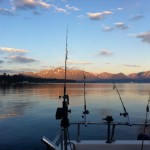
Lake Tahoe can appear so blue because of its great depth, purity, and the clarity of the dark blue sky found at higher elevations. Generally, the deeper the lake is, the bluer it looks. It can also appear red during sunsets, or gray-black during storms.
How cold is the water?
The water in Lake Tahoe is very cold, staying at a constant 39 degrees F below 600 feet. Shallow areas along the shore can warm up to 68 degrees F during the summer months.
Does it ever freeze?
Lake Tahoe's tremendous depth and volume is always in motion. This has kept the lake from ever freezing over, though some protected inlets like Emerald Bay have been covered with a layer of ice.
How clear is it?
Lake Tahoe is so clear in some places that objects can be seen to depths of 75 feet. Most of the precipitation that falls in the basin drains through marshes and meadows, which are good filtering systems for water.
Is Lake Tahoe's clarity threatened?
Yes. Although Lake Tahoe is going through a natural aging process, slowly filling in with sediments like other lakes, additional amounts are washed into the lake as slopes are cleared for construction. Each sediment particle carries nutrients which stimulate algae growth that could eventually cloud the famous clarity of the lake. Protecting the Lake's water quality is "Job 1" for the Forest Service at Lake Tahoe. Environmentally sensitive lands have been purchased and strict environmental standards adopted. Interagency monitoring programs continually test the impact of human activities on water quality.